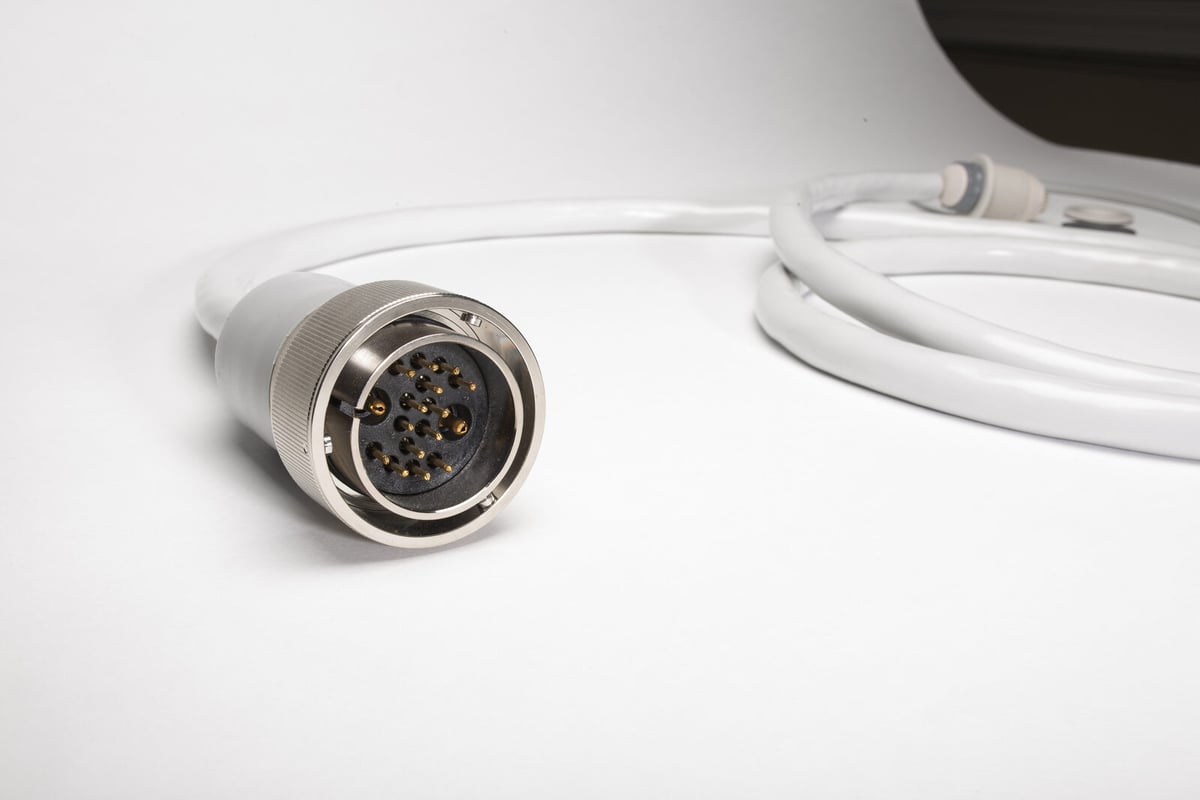
High-Voltage Interconnects for Medical Devices
Caton designs and manufactures custom high-voltage cable assemblies for medical capital equipment — diagnostic imaging, radiation therapy, sterilization systems, electrosurgery, and neuromodulation platforms. We are a low-volume, high-complexity specialty supplier built for custom HV engineering, not for high-volume disposable assemblies. Engineering-led since 1973.
Custom high-voltage interconnect for medical capital equipment
Caton serves medical OEMs and the high-voltage power supply manufacturers who supply them, on programs where the interconnect is custom-engineered rather than catalog-selected, where volume is measured in dozens to hundreds rather than thousands, and where the assembly carries enough HV stress that off-the-shelf parts won't qualify. Our engineering and quality leadership came up in the medical industry. Our quality system is AS9100, which carries the same risk-based design control and traceability backbone that medical capital equipment programs run on.
We do not build high-volume disposable medical assemblies, and we do not pursue patient-contact device work. We build the high-voltage assemblies inside the cabinet — accelerator power conditioning, RF and HV delivery to surgical generators, neuromodulation pulse delivery, and the custom HV interconnect that imaging, therapy, and sterilization platforms require.
High-voltage engineering aligned to medical capital equipment
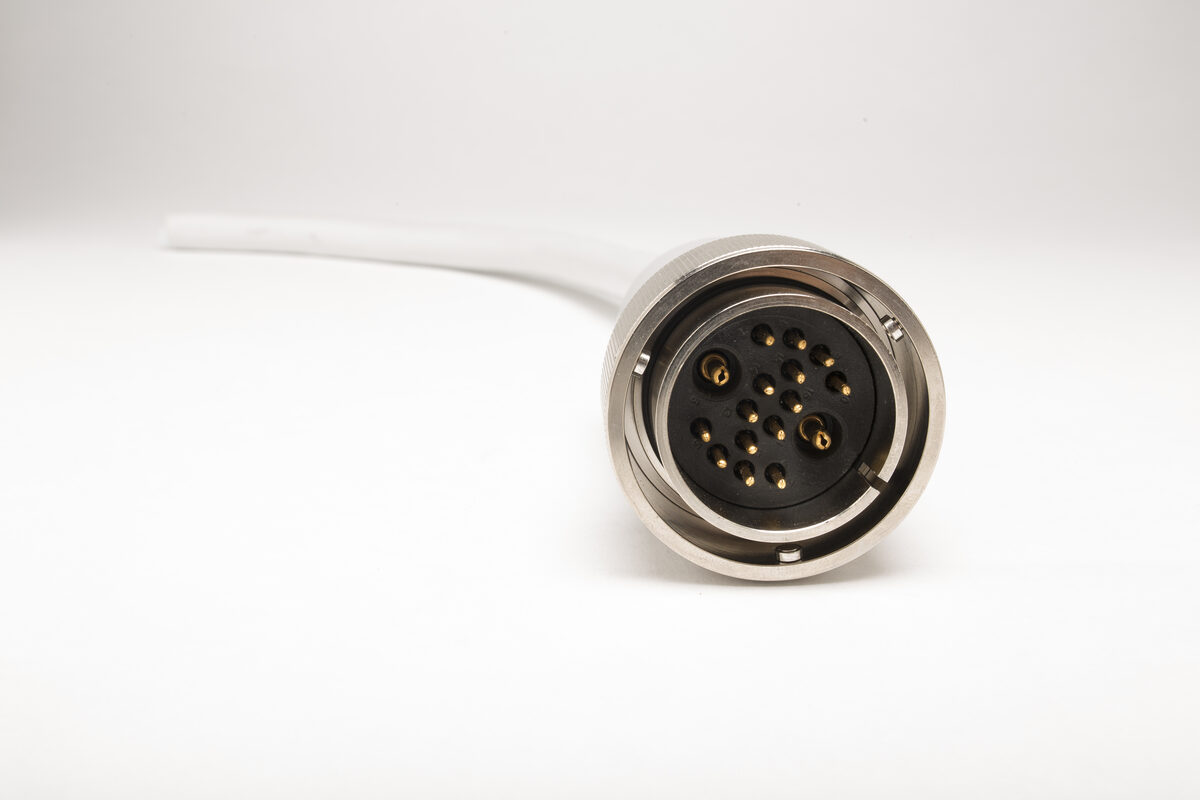
Custom HV interconnect engineered for the cabinet, the modality, and the regulatory regime. Multi-conductor signal and power assemblies, overmolded HV terminations, and precision connector geometries — all designed under AS9100 controlled processes by an engineering team with medical industry experience.
Custom cable and connector design from 1 kV to 250 kV. Finite element analysis using Electro V10.2 for electric field optimization, corona mitigation, and dielectric stress analysis. Materials selection driven by application and regulatory environment, not catalog availability.
Overmolded HV terminations engineered for the application — not adapted from commercial parts. Overmold geometry, materials, and processing are part of the electrical design, including for assemblies subjected to repeated cleaning, sterilization cycles, and long service life.
Corona inception and extinction, partial discharge, hi-pot, insulation resistance, dielectric withstand, leakage current, and thermal cycling — all in-house. Altitude testing to 70,000 ft in our Tenney altitude chamber. Manufacturing engineers work at benches on the production floor, alongside the test stations and the build, so design issues get caught and resolved in real time.
AS9100-certified quality management system. Risk-based design control, full traceability, locked configurations, and serialized build records. AS9100 and ISO 13485 share substantial common ground — risk-based thinking, design control, configuration management, supplier control. Caton's engineering and quality leadership came up in the medical industry and built the QMS to support medical capital equipment programs.
PEEK insulators for high-temperature and sterilization-tolerant service. FEP-jacketed cable for chemical resistance and dielectric stability. Silicone overmold for HV termination geometry. UL 94 V-0 flammability ratings on cable jacket and overmold materials.
Medical capital equipment platforms run for ten to twenty years in the field. Locked configurations, controlled change management, build records archived for the life of the program. The assembly qualified at design release is the same assembly built in year fifteen.
Where Caton interconnect fits in medical capital equipment
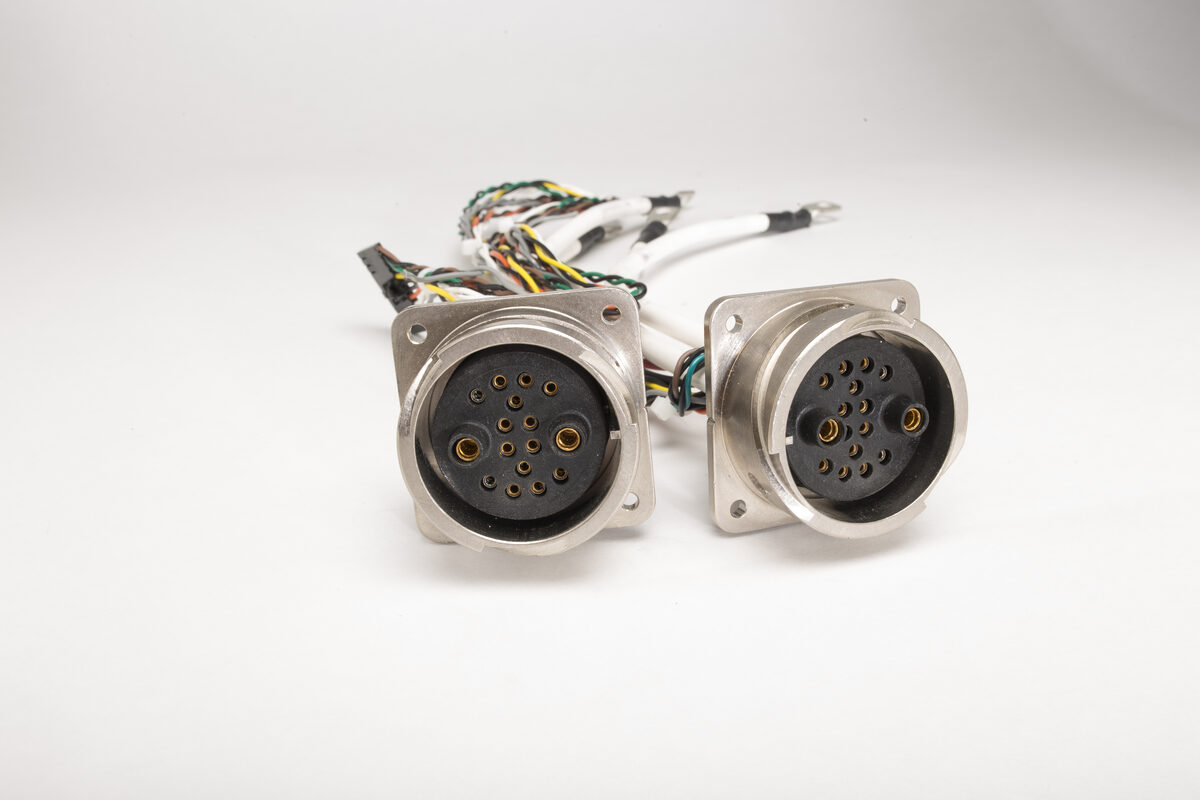
A specialty supplier built for custom HV engineering — not for high-volume disposables
Caton serves the medical market as an engineering-first specialty supplier. We engage directly with medical capital equipment OEMs on programs where the high-voltage interconnect requires custom engineering, and we ship into medical end-use through tier-1 HV power supply manufacturers who serve imaging, therapy, and sterilization platform OEMs. Either path leads to the same engineering bench.
The programs we're built to engage:
We are not built for high-voltage disposable medical assemblies, patient-contact device work, or commodity connector supply. The engagement is engineering-led, the volume is dozens to hundreds, and the relationship is direct.
Custom HV engineering, low-volume / high-mix, and engineering accountability
Medical capital equipment HV interconnect rarely fits a catalog connector. Caton designs the assembly to the application: corona-free at the operating voltage, geometries that integrate into the cabinet, materials selected for the regulatory environment.
Medical capital equipment programs ship in dozens to hundreds, not thousands. Caton's low-volume, high-mix model is built for that scale — without the per-unit overhead of a high-volume contract manufacturer or the inflexibility of a catalog vendor.
Your design engineer talks to our design engineer. The answer comes from the person who can change the design, not from an account manager who has to check with engineering and call you back.
Medical capital equipment platforms stay in the field for decades. Locked configurations, controlled change management, and same-team engineering since 1973 mean the assembly qualified at design release stays available, identical, and engineering-supported through the program lifecycle.
Working with Caton on a medical capital equipment program
We're built for the design phase of new medical capital equipment platforms and for the recovery or sustainment phase of programs where the incumbent supplier can no longer build, qualify, or support the HV interconnect. We respond to RFQs at the development, qualification, and production stages, and we support sustainment, obsolescence management, and configuration recovery on legacy platforms. We are a specialty HV engineering supplier — not a high-volume disposables manufacturer.
Explore other industries we serve
Talk to engineering about your medical capital equipment program
Your design engineer talks to our design engineer. New platform development, qualification recovery, sustainment, or obsolescence management on fielded medical equipment — the conversation starts at the engineering bench.