semiconductor-1
What we do

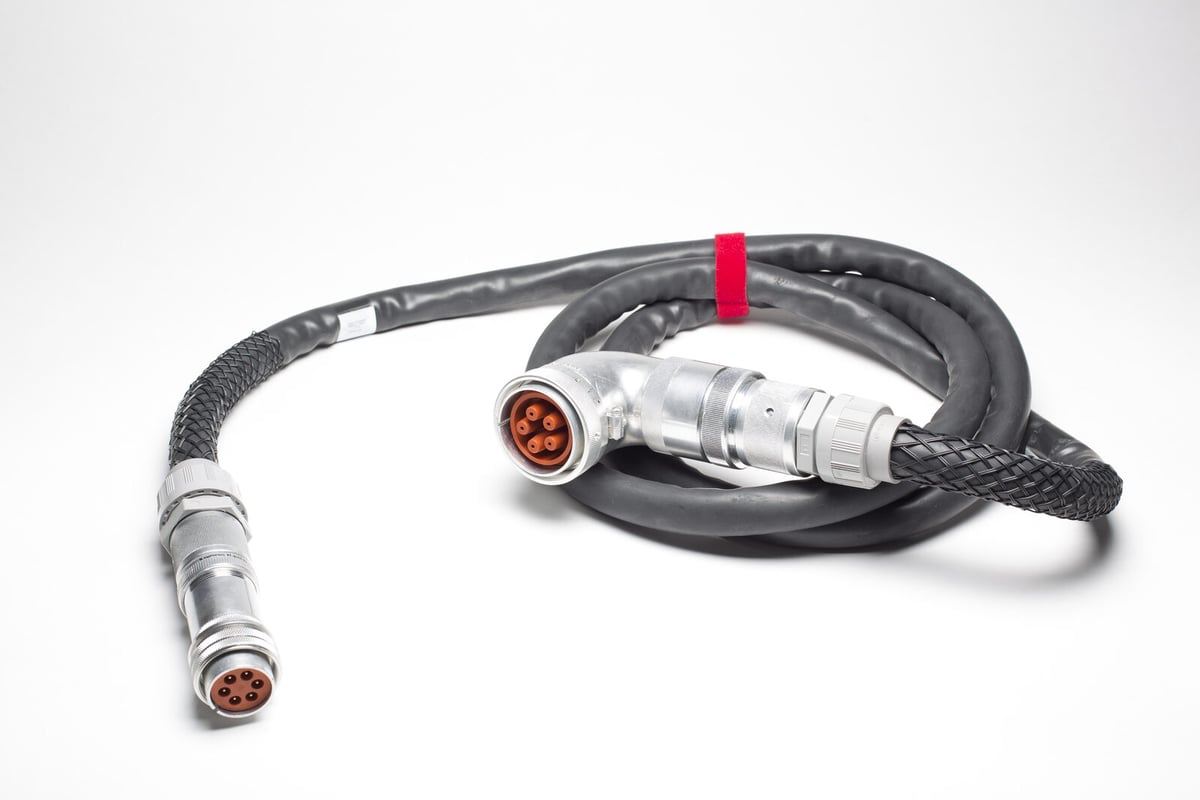
The engineering team responsible for the high-voltage interconnect

We are the engineering team responsible for the high-voltage interconnect on semiconductor capital equipment where partial discharge, corona inception, and dielectric stability are the difference between a tool that runs at spec and a tool that goes down at 2 a.m. Our customers come to us when an off-the-shelf connector won't hold at the operating voltage, when vacuum compatibility rules out catalog parts, or when the program's connector vendor can't hit the lead time the equipment build needs.

We own the full interconnect: cable design, connector design, in-house overmolding, vacuum feedthrough integration, and complete electrical qualification under one roof. We do not subcontract the parts of the assembly that determine whether it works.

Engineering capability

Corona-free design, vacuum integration, and dielectric materials engineering
semiconductor-2

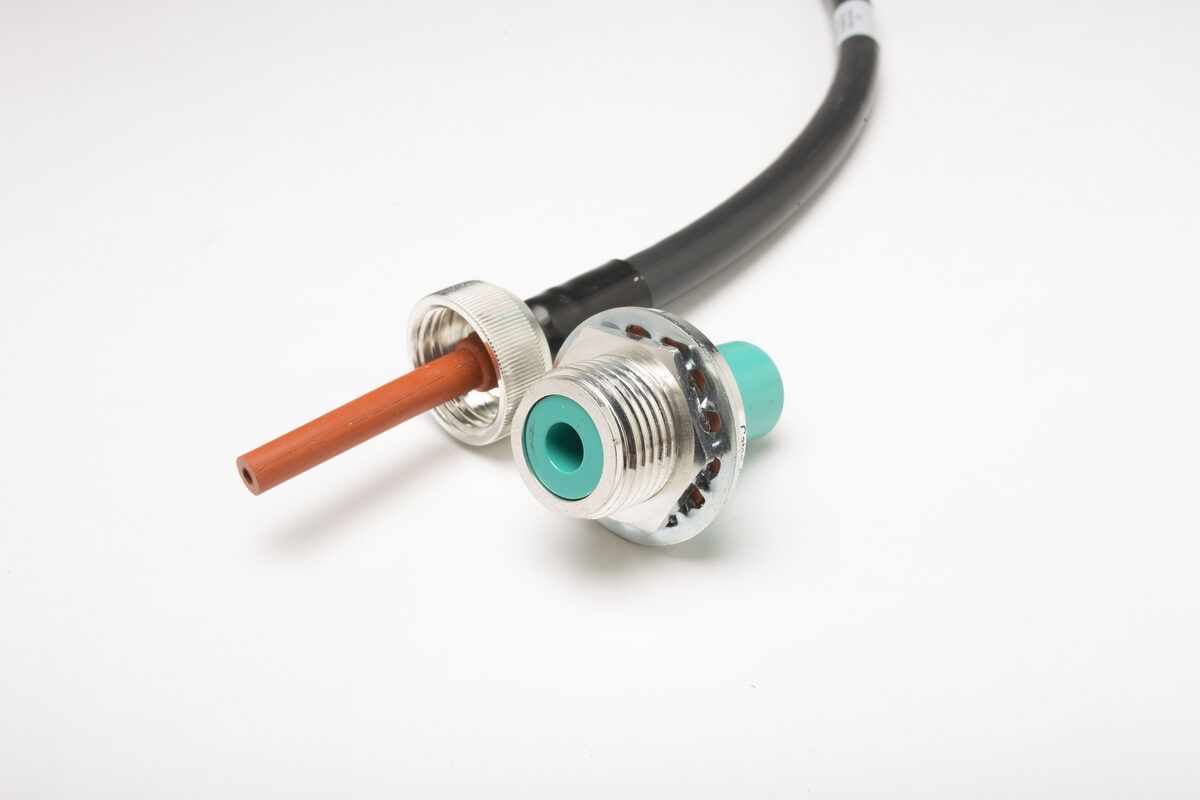
HV feedthroughs engineered for chamber operation: leak-rate qualified, low-outgassing materials, geometries that maintain corona-free performance on both the air side and the vacuum side. Compatible with KF, ISO, ConFlat, and custom flange geometries.

Capability
Corona-free design at the operating voltage

Custom cable and connector design from 10 kV to 50 kV with corona inception margin engineered into the geometry, not assumed. Finite element analysis using Electro V10.2 for electric field optimization and partial discharge mitigation. Materials selection driven by the dielectric environment — air, vacuum, oil, or potted — not catalog availability.

In-house overmolding

Overmolded HV terminations engineered for the application, not adapted from commercial parts. Overmold geometry, materials, and processing are part of the electrical design — they determine where corona inception happens, how the dielectric ages, and how the assembly behaves over thousands of cycles.

Capability
Dielectric materials engineered for the application

PEEK insulators for high-temperature and vacuum service. FEP-jacketed cable for chemical resistance and dielectric stability. Silicone overmold for high-voltage termination geometry control. Stainless steel and copper-zinc connector hardware for mechanical durability. Materials selected per application, not per catalog.

Test capability on-site

Corona inception and extinction, partial discharge, hi-pot, insulation resistance, dielectric withstand, leakage current, and thermal cycling — all in-house. Manufacturing engineers work at benches on the production floor, alongside the test stations and the build, so design issues get caught and resolved in real time.

Typical specifications

Representative electrical and environmental capability

SpecificationValue
Operating voltage range10 kV to 50 kV DC (standard); to 100 kV (custom)
Hi-pot test voltageUp to 100 kV DC
Partial discharge< 5 pC at 50 kV DC
Leakage current< 1 µA at 50 kV DC
Operating temperature−50°C to +100°C
Flammability ratingUL 94 V-0 (cable jacket and overmold materials)
Insulation materialsPEEK, FEP, silicone
Connector hardwareStainless steel, copper-zinc

Specifications represent typical values for representative product families. Actual qualification specifications are application-specific and confirmed during program engineering.

What ships with every assembly
  • Serialized part marking traceable to build records
  • Electrical test report (hi-pot, partial discharge, leakage current) for each unit
  • Material certifications and process traceability per AS9100
Programs and applications

Where Caton interconnect is specified today
semiconductor-3
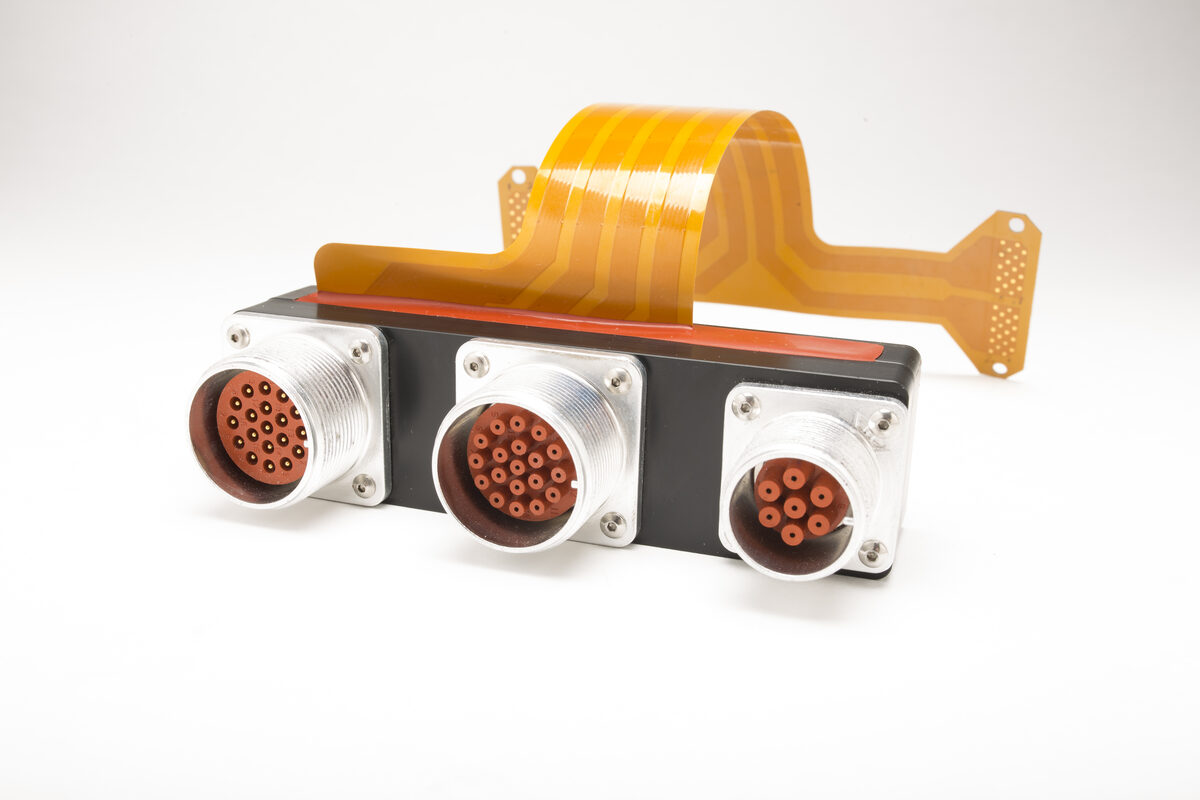
E-beam systems — column power and signal interconnect for e-beam lithography, e-beam inspection, and CD-SEM platforms. Vacuum feedthroughs and HV cable assemblies engineered for stable, drift-free performance at the column operating voltage.
Mass spectrometry — HV interconnect for ion source power, detector bias, and analyzer voltages. Corona-free design at 10–30 kV with the long-term dielectric stability that analytical instruments demand.
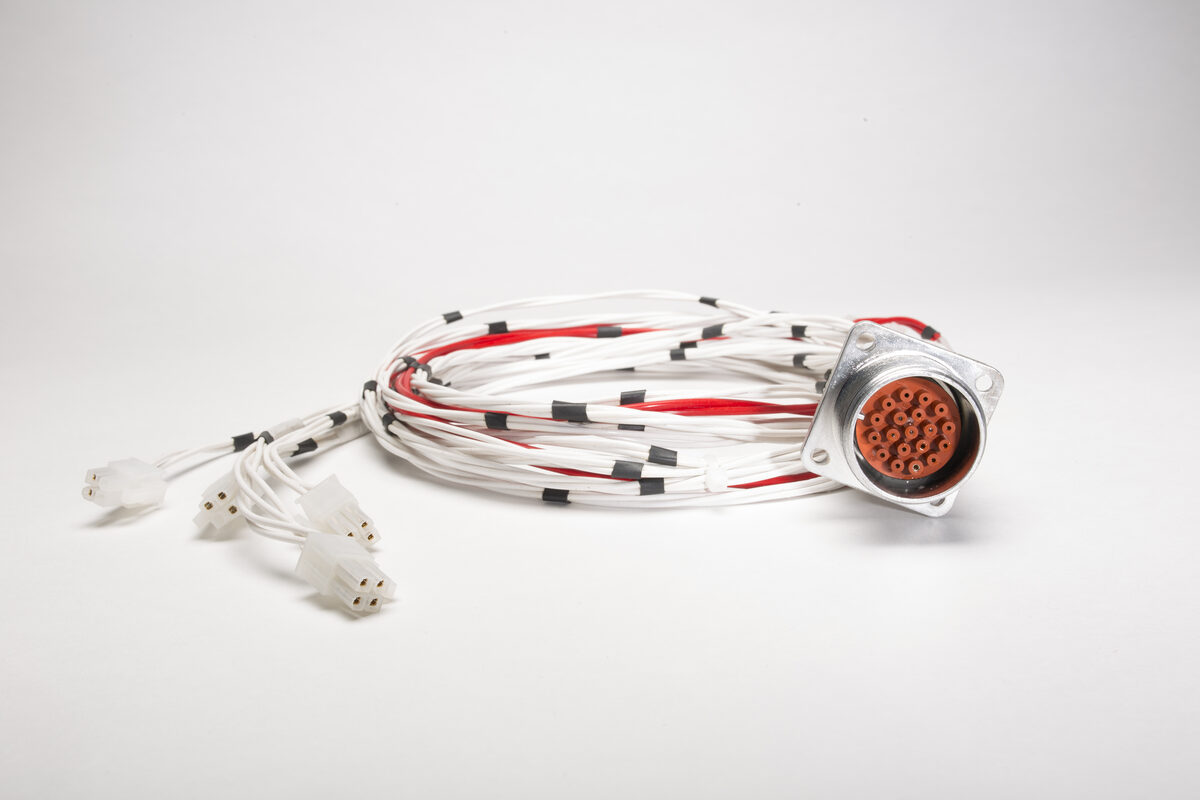
Wafer test and burn-in — multi-conductor harnesses for high-channel-count test heads and burn-in racks, including signal, low-voltage power, and HV bias lines. Engineered for cycle life and reproducibility across thousands of insertions.
Industry leaders who trust Caton

Engineering relationships across the top of US semi process equipment

Applied MaterialsKLALam Research

Components specified into e-beam process control, mass spectrometry, and semiconductor capital equipment programs. Specific program references available under appropriate disclosure.

Why semi engineers choose Caton

Engineering accountability for the parts that hold the voltage
semiconductor-4

The same engineering group designs the cable, the feedthrough, and the overmold. The dielectric path is one continuous design, not three suppliers' parts mated together — and the test data ships with the part.

Reason
Corona-free is the design constraint, not a footnote

At 10–50 kV in air, corona inception is the dominant failure mode and most catalog connectors don't have margin. Caton designs the geometry to hold, qualifies it on the bench, and ships data with the part. You don't find out in the fab.

We hit capital equipment lead times

Semi capital programs run on tight build schedules and the connector vendor is often the long pole. Caton's full in-house design, build, and test capability means we don't wait on a sub-tier connector house. Standard programs ship in weeks, not months.

Reason
Engineering response is direct

Your design engineer talks to our design engineer. No account manager translation layer, no “I'll have to check with engineering.” The answer comes from the person who can change the design.

Vacuum and dielectric expertise from one team

The same engineering group designs the cable, the feedthrough, and the overmold. The dielectric path is one continuous design, not three suppliers' parts mated together. Test data is generated and shipped with each unit.

Engagement

Working with Caton on a semiconductor program

We're built for the design phase of new tool platforms and for the recovery phase of existing programs where the incumbent supplier can't hold corona, can't hit lead time, or can't qualify the vacuum feedthrough. The earlier we're engaged, the more design margin we can build in. We respond to RFQs at the proof-of-concept, alpha, and production-build stages, and we support sustainment and obsolescence on legacy tools.

Other markets

Explore other industries we serve

Defense
Defense
High-voltage interconnect for missile defense, directed energy, hypersonics, and space-based defense.
Explore →
Aerospace
Aerospace
High-voltage interconnect qualified for commercial and military aerospace platforms.
Explore →
Scientific
Scientific & Research
Custom HV assemblies for research platforms operating at extreme voltages.
Explore →

Talk to engineering about your semi program

Your design engineer talks to our design engineer. New tool platform development, qualification recovery, sustainment, or obsolescence on legacy equipment — the conversation starts at the engineering bench.