
High-Voltage Interconnects for Scientific Instruments
Caton designs and manufactures custom high-voltage cable assemblies from 1 kV to 250 kV for particle accelerators, plasma and fusion research, advanced spectrometry, and research instrumentation — where standard catalog products do not exist and the requirement is engineered from first principles. Engineering-led since 1973.
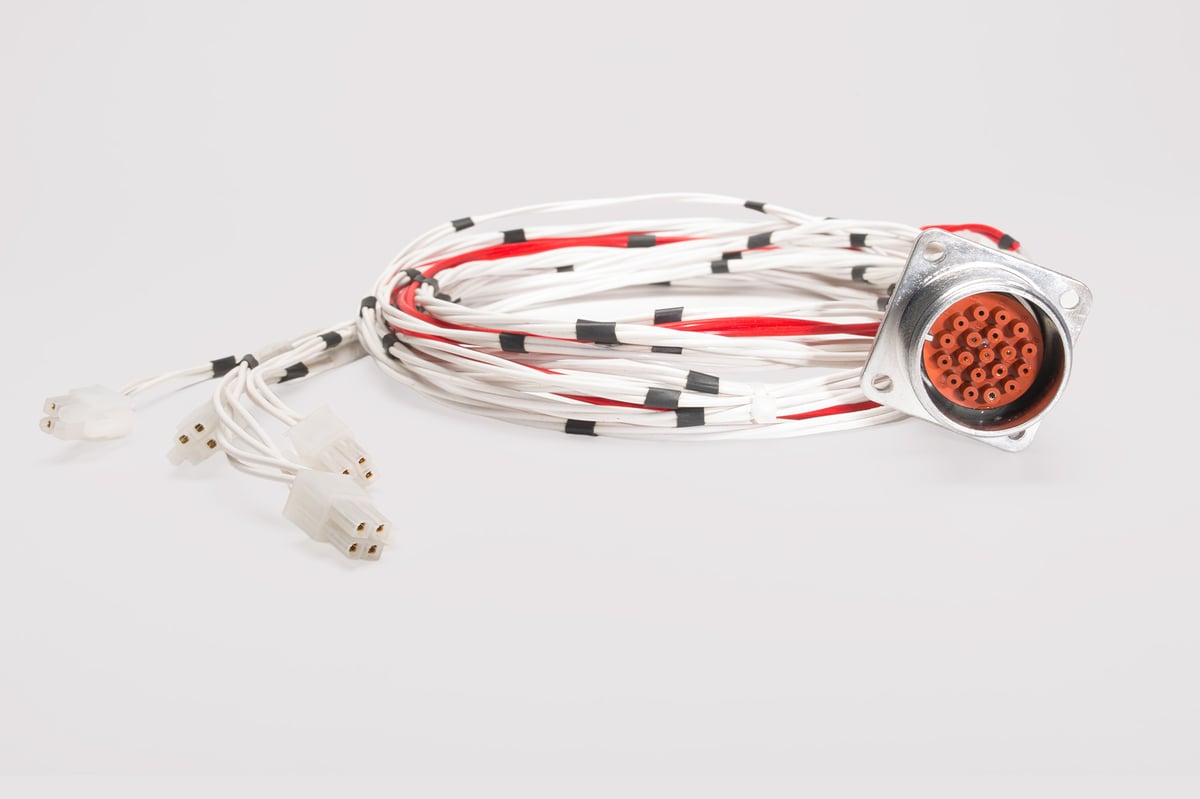
The engineering team responsible for the high-voltage interconnect
We are the engineering team responsible for the high-voltage interconnect on research platforms where the operating voltage, environment, or geometry puts the requirement entirely outside what catalog suppliers offer. Our customers come to us with a specification that has no off-the-shelf answer — non-standard voltage classes, unusual dielectric environments, radiation or cryogenic exposure, or geometries the platform integration demands — and need an engineering partner who will design the interconnect from first principles.
We own the full interconnect: cable design, connector design, in-house overmolding, dielectric materials selection, and complete electrical qualification under one roof. We do not subcontract the parts of the assembly that determine whether it works.
First-principles HV design across non-standard environments
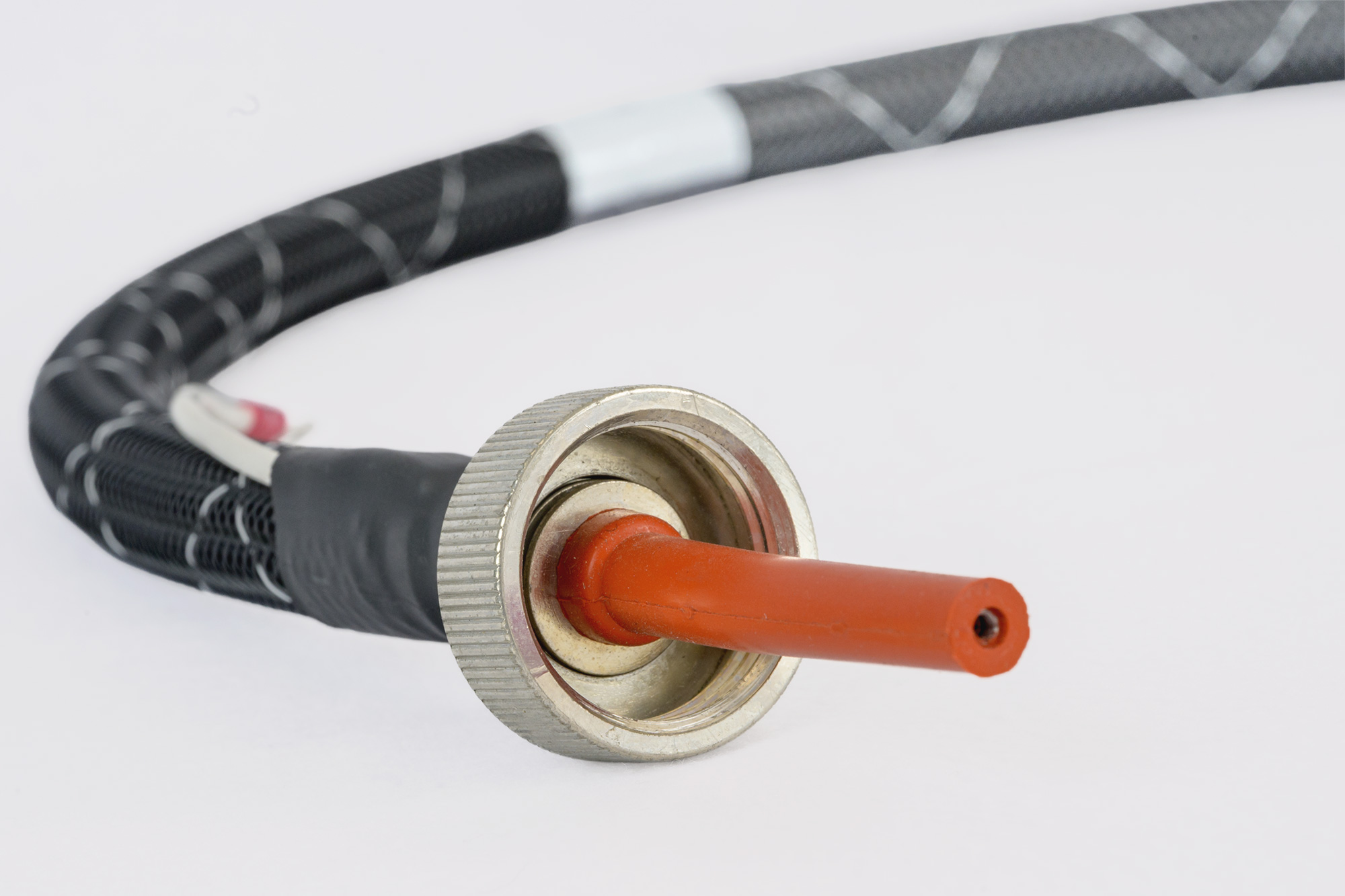
HV cable and termination geometry engineered for the specific dielectric environment of the research platform — whether that's vacuum, oil, gas, cryogenic, or radiation. Materials selection driven by the application physics, not catalog availability.
Research programs frequently require voltage classes, insulation geometries, or conductor arrangements that fall entirely outside catalog product lines. Caton evaluates the specific voltage, geometry, and environmental requirement and designs the assembly accordingly — from 1 kV to 250 kV, with finite element analysis using Electro V10.2 for electric field optimization at extreme voltages.
Overmolded HV terminations engineered for the dielectric environment, not adapted from commercial parts. At the voltage levels common in research applications, overmold geometry and materials are part of the electrical design — not packaging. They determine where corona inception happens and whether the assembly holds for the duration of the experiment.
Radiation environments, cryogenic temperatures, ultra-high vacuum, and chemical exposure that standard insulation systems cannot withstand without degradation. Materials evaluation for radiation hardness, cryogenic flexibility, vacuum outgassing, and long-term dielectric stability under the actual operating environment.
At the voltage levels common in research, corona inception isn't just a reliability concern — it injects electrical noise that interferes with the measurement. Caton's corona-free design is built into the geometry from the outset, not added as a post-design treatment. Highest-voltage platforms are specified corona-free at operating voltage and qualified on-site to the application requirement.
Research programs require design iteration before a final configuration is established. Standard manufacturing lead times and minimum order quantities create friction that doesn't fit the research timeline.
Corona inception and extinction, partial discharge, hi-pot, insulation resistance, dielectric withstand, and thermal cycling — all in-house. Manufacturing engineers work at benches on the production floor, alongside the test stations and the build, so design iteration happens in days, not weeks.
Representative electrical and environmental capability
| Specification | Value |
|---|---|
| Operating voltage range | 1 kV to 250 kV DC |
| Hi-pot test voltage | Application-specific |
| Partial discharge | Application-specific; corona-free at operating voltage |
| Operating temperature | Cryogenic to elevated, application-dependent |
| Environment | Vacuum, oil, gas, cryogenic, radiation, custom |
| Insulation materials | PEEK, FEP, silicone, polyimide, application-specific |
| Connector hardware | Stainless steel, copper-zinc, custom |
| Quantities | Single-unit prototype through low-volume production |
Specifications represent typical values for representative product families. Actual qualification specifications are application-specific and confirmed during program engineering.
- Serialized part marking traceable to build records
- Electrical test report (hi-pot, partial discharge, leakage current) for each unit
- Material certifications and process traceability per AS9100
Where Caton interconnect is specified today
Built for the work that doesn't exist in a catalog
Most of what we build for research customers is single-unit or small-quantity, configured for one platform, and not destined for serial production. That's the work we're built for. The engineering hours that go into a one-off HV assembly for an accelerator beamline or a fusion diagnostic are the same hours we put into a production aerospace program — the same FEA, the same dielectric materials review, the same in-house qualification. The discipline doesn't scale down with the quantity.
Caton has supported research customers across national laboratories, university research facilities, and corporate research programs since 1973. Specific program references are available under appropriate disclosure.
Engineering accountability for the parts that hold the voltage
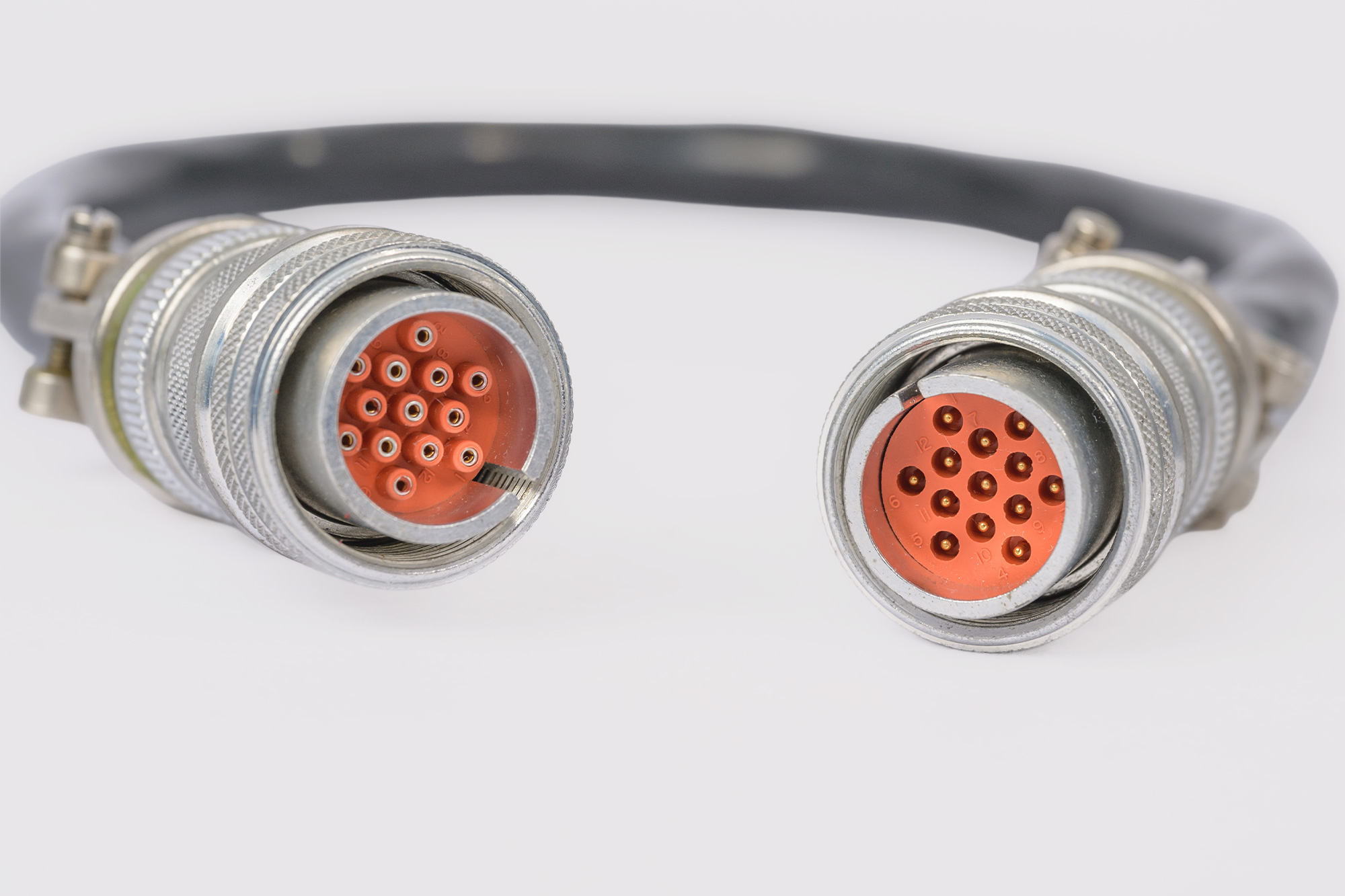
The same engineering group designs the cable, the connector, and the overmold. The dielectric path is one continuous design, not three suppliers' parts mated together — and the test data ships with the part.
Research applications routinely fall outside what catalog suppliers offer. Caton starts from the requirement — voltage, environment, geometry, lifecycle — and engineers the assembly. Standard product platforms are starting points for customization, not constraints on what we'll build.
We don't penalize low quantities. Single-unit prototypes, small-batch builds, and design iteration are how research programs work, and they're part of how we work. Engineering support is full from the first conversation regardless of order size.
Your design engineer talks to our design engineer. No account manager translation layer, no “I'll have to check with engineering.” The answer comes from the person who can change the design.
In research, corona inception isn't just a reliability concern — it injects electrical noise that contaminates the data. Caton designs the geometry to hold corona-free at the operating voltage, qualifies it on the bench, and ships data with the part. The interconnect doesn't become a variable in the experiment.
Working with Caton on a research program
We're built for the design phase of new research platforms and for the recovery phase of existing programs where the incumbent supplier can't hold corona at the operating voltage, can't deliver the prototype the platform integration needs, or can't qualify materials for the dielectric environment. The earlier we're engaged, the more design margin we can build in. We respond to inquiries at the proof-of-concept, prototype, and small-batch production stages.
Explore other industries we serve
Talk to engineering about your research program
Your design engineer talks to our design engineer. New platform development, prototype work, or replacement of an interconnect that won't hold — the conversation starts at the engineering bench.